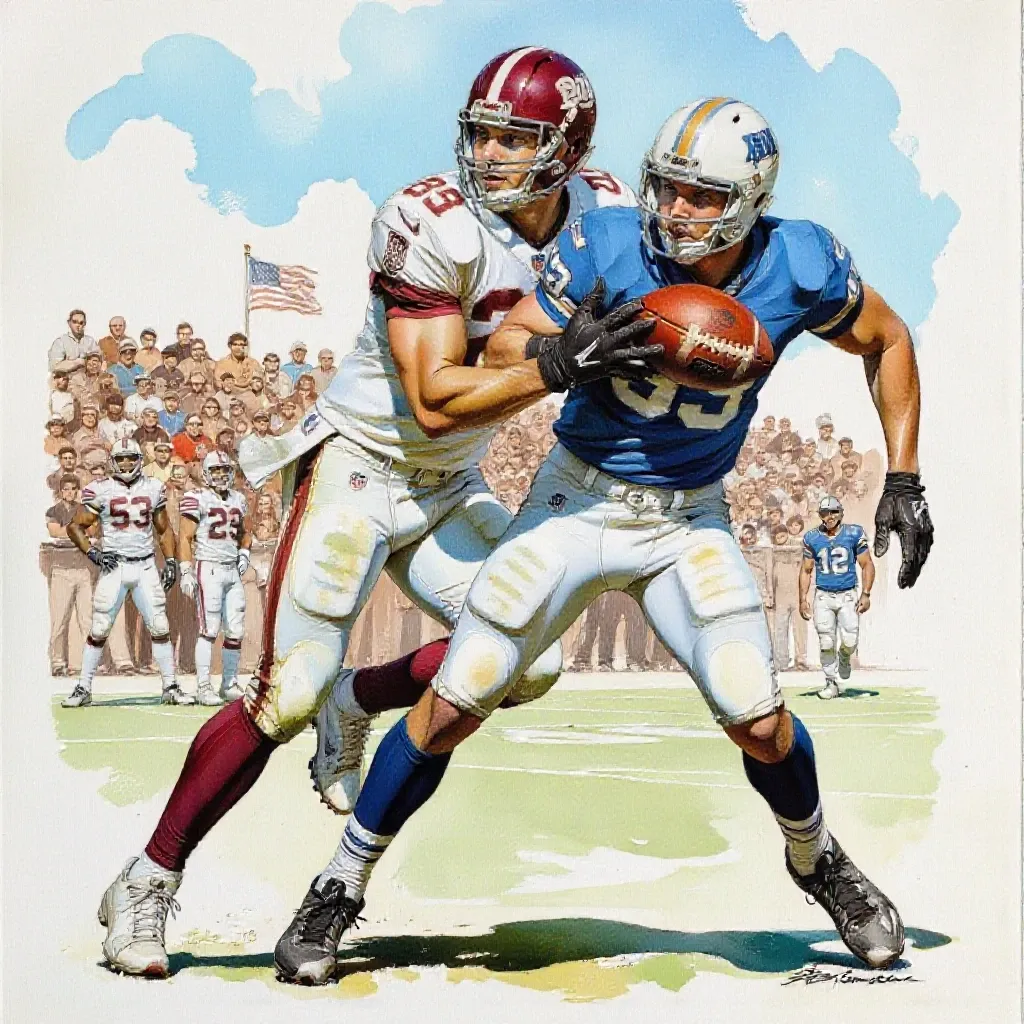
Remember that nail-biting championship game where the heavily favored team choked, and the scrappy underdog pulled off a stunning upset? Moments like those are etched in sports history, but beyond the thrill, they hold a valuable lesson for bettors. Most people instinctively back the favorites, lured by the perceived safety of predictable outcomes. But what if expertise could unlock a hidden world of profit by strategically betting on underdogs?
Underdog betting isn’t about blindly throwing money at long shots. It’s a calculated approach that leverages in-depth knowledge, sharp analysis, and an understanding of value. This guide will equip you with the practical tools and insights needed to navigate the world of underdog betting and potentially turn a perceived disadvantage into a lucrative opportunity. Prepare to challenge conventional wisdom and discover how to find value where others overlook it – in the realm of the underdog.
Understanding Underdog Betting
In the realm of sports betting, the term “underdog” refers to the team or individual perceived to have a lower probability of winning a particular event. Identifying the underdog is crucial for anyone looking to explore potentially lucrative betting opportunities. Simply put, the underdog is the competitor expected to lose.
The odds offered on underdogs reflect their perceived disadvantage and are presented in various formats. Understanding these formats is essential to calculating potential payouts and assessing the true risk and reward. The most common formats include:
- Moneyline Odds: Predominantly used in the United States, Moneyline odds express the amount one needs to wager to win $100 (for underdogs) or the amount one wins for wagering $100 (for favorites). For example, an underdog with +200 odds means a $100 bet wins $200 in profit.
- Fractional Odds: Popular in the UK, fractional odds represent the ratio of profit to the stake. For instance, odds of 5/1 indicate that one wins $5 for every $1 staked, in addition to getting the initial stake back.
- Decimal Odds: Widely used in Europe, decimal odds represent the total payout one receives for every $1 staked, including the return of the initial stake. For example, decimal odds of 3.00 mean a $1 bet returns $3 in total.
Furthermore, betting odds allow gamblers to calculate the implied probability of an outcome. Implied probability represents the conversion of betting odds into a percentage chance of that outcome occurring. Bettors can determine whether an underdog has been fairly assessed. The formulas to calculate implied probability differ based on the odds format being used. With these calculations, bettors are equiped to fully engage in sports wagering.
The Allure of the Upset: Why Underdogs Sometimes Win
The sporting world is filled with captivating moments, but few resonate quite like the unexpected triumph of the underdog. These upsets aren’t just random occurrences; they’re a fascinating intersection of psychological biases, statistical anomalies, and sheer, unadulterated grit. We are absolutely hooked because it flies in the face of what’s seemingly predictable.
Momentum plays a huge role. A team that starts strong can ride that wave of confidence, amplifying their performance and rattling their opponents. Couple that with a roaring home crowd, and the advantage becomes palpable. This isn’t just about noise; it’s about a surge of energy boosting the players and creating a challenging environment for the favored team.
Cognitive biases also muddy the waters. Anchoring bias, for instance, can lead fans and even players to fixate on pre-game expectations, overlooking the shifting dynamics of the actual contest. Then there’s variance, the inherent randomness in any competition. Sometimes, the bounces just go the underdog’s way, leading to what some might call “black swan” events – low-probability occurrences with a massive impact.
Think of Leicester City’s improbable Premier League title run, or the Miracle on Ice at the 1980 Winter Olympics. These weren’t just lucky breaks; they were a perfect storm of preparation, opportunity, and a refusal to be intimidated by the odds.

Identifying Value in Underdogs: A Data-Driven Approach
Unearthing value in underdogs is about identifying opportunities where the perceived probability of a win, as reflected in betting odds, significantly diverges from a truer, more accurate assessment. This is the core tenet of value betting. Instead of blindly following popular opinion or gut feelings, a data-driven approach uses statistical analysis and key performance indicators (KPIs) to spot undervalued contenders.
Several statistical indicators can provide insight into an underdog’s potential. Recent performance trends offer a snapshot of current form, revealing whether a team or player is on an upward trajectory, even if their overall record is unimpressive. Head-to-head records against their opponent can highlight favorable matchups or uncover psychological edges that defy broader expectations. Injury reports are crucial for understanding the true strength of both sides; an underdog facing a weakened favorite suddenly becomes far more attractive. These aren’t just casual observations: compare them to historical data to see if similar situations have yielded unexpected results.
Data analytics plays a pivotal role in quantifying these observations. By crunching the numbers, it’s possible to build simple predictive models that estimate win probabilities based on a range of relevant factors. Think regression models that weigh different stats based on their historical impact on game outcomes. More advanced approaches can incorporate machine learning models to uncover non-linear relationships and predict outcomes with greater accuracy. For example, a basic model might factor in recent scoring differential, home/away advantage, and opponent strength to generate a projected point spread. More realistically, machine learning models can sift through thousands of data points to identify subtle indicators that human analysts might miss, adjusting predictions accordingly.
When assessing underdogs, consider these KPIs:
- Recent Form vs. Average Form: How does the underdog’s performance in the last few games compare to their season average?
- Performance Against Top Teams: Does the underdog rise to the occasion against tougher opponents?
- Key Player Matchups: Does the underdog have a player who matches up well against the favorite’s star player?
- Pace of Play: Can the underdog dictate the tempo of the game to their advantage?
- Clutch Performance: How does the underdog perform in close games or critical moments?
Leveraging Advanced Stats
Advanced statistics offer a deeper dive into player and team performance, moving beyond traditional box score numbers to reveal hidden strengths and weaknesses. In the NBA, usage rate (USG%) indicates how often a player is involved in a team’s possessions, offering insights into their potential impact, even if they aren’t the leading scorer. In the NFL, analytics focus on metrics like Expected Points Added (EPA) and Completion Percentage Over Expectation (CPOE) to evaluate quarterbacks beyond just yardage and touchdowns. MLB utilizes sabermetrics such as Wins Above Replacement (WAR) to provide an all-encompassing evaluation of a player’s total contribution. Soccer leverages Expected Goals (xG) to assess the quality of scoring opportunities, separating luck from skill. Using these stats provides an edge by quantifying aspects of the game that traditional stats often overlook.
Sport-Specific Strategies: Where Underdogs Thrive
Certain sports, by their very nature, are breeding grounds for upsets, making them fertile territory for underdog betting strategies. Unlike team sports with multiple players and complex dynamics, individual sports often hinge on a single athlete’s performance, creating higher variance and more opportunities for underdogs to triumph.
Boxing and MMA are prime examples. The unpredictable nature of combat sports, where a single punch or well-executed maneuver can change everything, levels the playing field. While a favorite might possess superior technique or a stronger record, the inherent chaos of the fight game means that underdogs always have a puncher’s chance, and savvy bettors can capitalize on this unpredictability.
Tennis also presents numerous opportunities for successful underdog bets. The grueling nature of tournaments, where players compete in multiple matches over several days, can lead to fatigue or unexpected slumps. A lower-ranked player with a favorable matchup or a hot streak can easily upset a higher-seeded opponent, particularly in the early rounds.
Golf, especially in tournament betting, provides another avenue for underdog plays. The sheer number of competitors and the inherent variability of the sport mean that longshots regularly contend for the lead. Furthermore, prop bets, such as whether a particular player will make the cut or achieve a certain score, can offer excellent value when targeting underdogs with specific skills or favorable course conditions.
By focusing on these sports and exploring specific betting markets, underdog bettors can identify advantageous situations and increase their chances of turning a profit.
Risk Management: Protecting Your Bankroll
Betting on underdogs can be thrilling, but without solid bankroll management, the excitement can quickly turn into frustration. Protecting your bankroll is paramount. It’s the foundation upon which any successful underdog betting strategy is built. Think of it as investing – you wouldn’t throw all your money into a risky stock without a plan, right? The same logic applies here.
Effective bankroll management starts with defining your total betting bankroll – the amount you’re willing to risk losing. Once you’ve established this, the next step is choosing a staking plan. Several options exist, each with its own risk profile. Flat betting involves wagering the same amount on every bet, regardless of perceived value. This provides stability but may limit potential profits. Percentage staking, on the other hand, involves betting a fixed percentage of your bankroll on each wager. This method allows bet sizes to adjust automatically as your bankroll grows or shrinks – being a more dynamic approach.
The Kelly Criterion is a more advanced strategy that uses a formula to determine the optimal bet size based on your perceived edge and the odds offered. While precise, it requires accurate assessment of probabilities, which isn’t always easy with underdog betting. Regardless of the staking plan you choose, understanding your own risk tolerance is crucial. Are you comfortable with larger swings, or do you prefer a more conservative approach? Your risk tolerance should dictate the aggressiveness of your betting strategy.
Ultimately, disciplined bankroll management is the key to long-term success. Stick to your chosen staking plan, avoid chasing losses, and only bet with money you can afford to lose. Responsible gambling is not just a suggestion; it’s a necessity. By managing your bankroll wisely, you can enjoy the excitement of underdog betting without jeopardizing your financial well-being.

Common Pitfalls to Avoid
Betting on underdogs can be thrilling, but it’s also a minefield of potential mistakes. Avoiding these common pitfalls is crucial for long-term success and preventing significant losses. Here’s a look at some frequent errors bettors make:
Emotional Betting: Letting emotions dictate your bets is a recipe for disaster. When your favorite team is the underdog, the desire to see them win can cloud your judgment. Similarly, betting out of frustration after a loss (chasing losses) often leads to impulsive and poorly thought-out wagers, digging you into a deeper hole.
Overconfidence: A few lucky wins can breed overconfidence, leading you to believe you have a foolproof system. This can result in reckless betting and ignoring crucial data that suggests otherwise. Remember, even the most knowledgeable bettors experience losing streaks.
Lack of Research: Underdog betting requires diligent research. Simply picking an underdog because of perceived value without analyzing team statistics, player injuries, recent performance, and head-to-head records is a gamble, not a calculated risk. The more information you have, the better equipped you are to make informed decisions.
Confirmation Bias: This is the tendency to seek out and interpret information that confirms your existing beliefs, while ignoring evidence that contradicts them. If you’re convinced an underdog will win, you might only focus on data that supports that view, overlooking critical weaknesses that could lead to their defeat.
Imagine this: A bettor, fueled by pure fandom, wagers heavily on their hometown team, an obvious underdog with a losing record. Despite expert analysis highlighting the team’s poor defense and key player injuries, the bettor ignores the data, convinced their team will defy the odds. As the game unfolds, the underdog is soundly defeated, and the bettor suffers a substantial loss. This scenario perfectly illustrates the consequences of emotional betting, neglecting research, and falling prey to confirmation bias. Learning from such examples is vital for responsible and strategic underdog betting.
Conclusion
Mastering the underdog betting strategy isn’t about blind hope; it’s about calculated risk and identifying overlooked opportunities. By embracing value betting, understanding inherent biases, and implementing robust risk management, anyone can level the playing field and transform perceived disadvantages into genuine profit potential.
The beauty of this approach lies in its flexibility. Whether a seasoned sports bettor or just starting out, the principles of underdog betting can be adapted to your specific knowledge base and comfort level. The key is continuous learning, diligent research, and a willingness to challenge conventional wisdom.
Successful underdog betting demands discipline and a keen eye for detail. Consistently analyze team performance and understand the nuances of value. The rewards for those who dare to challenge the status quo are significant. Equip yourself with the appropriate knowledge, and let the games begin.
“The greatest glory in living lies not in never falling, but in rising every time we fall.” – Nelson Mandela